

Zafu, Bench, or Chair? Choosing Your Meditation Seat
Of all the things that shape a meditation, the humblest is the most important: where you sit. The right seat holds your spine upright with ease, frees you from aching knees and a tiring back, and lets your attention rest on the practice rather than the body. The wrong one quietly works against you every minute. This is a clear guide to the three main ways to sit — floor cushion, kneeling bench, and chair — so you can choose the seat that will truly serve your daily practice.
There is no single “best” seat. The best one is simply the one that keeps you upright, comfortable, and coming back each day.
What every good meditation seat does
Whichever form you choose, a good seat does the same few things:
- Lifts the hips above the knees, so the pelvis tilts gently forward and the lower back keeps its natural curve.
- Lets the spine rise effortlessly, with an open chest and relaxed shoulders.
- Takes strain off the joints, so you can sit longer without pain.
- Insulates the body — in the yogic tradition, a covering of wool and silk is used to insulate the meditator from the earth’s subtle downward currents.
The floor: a cushion (zafu or crescent)
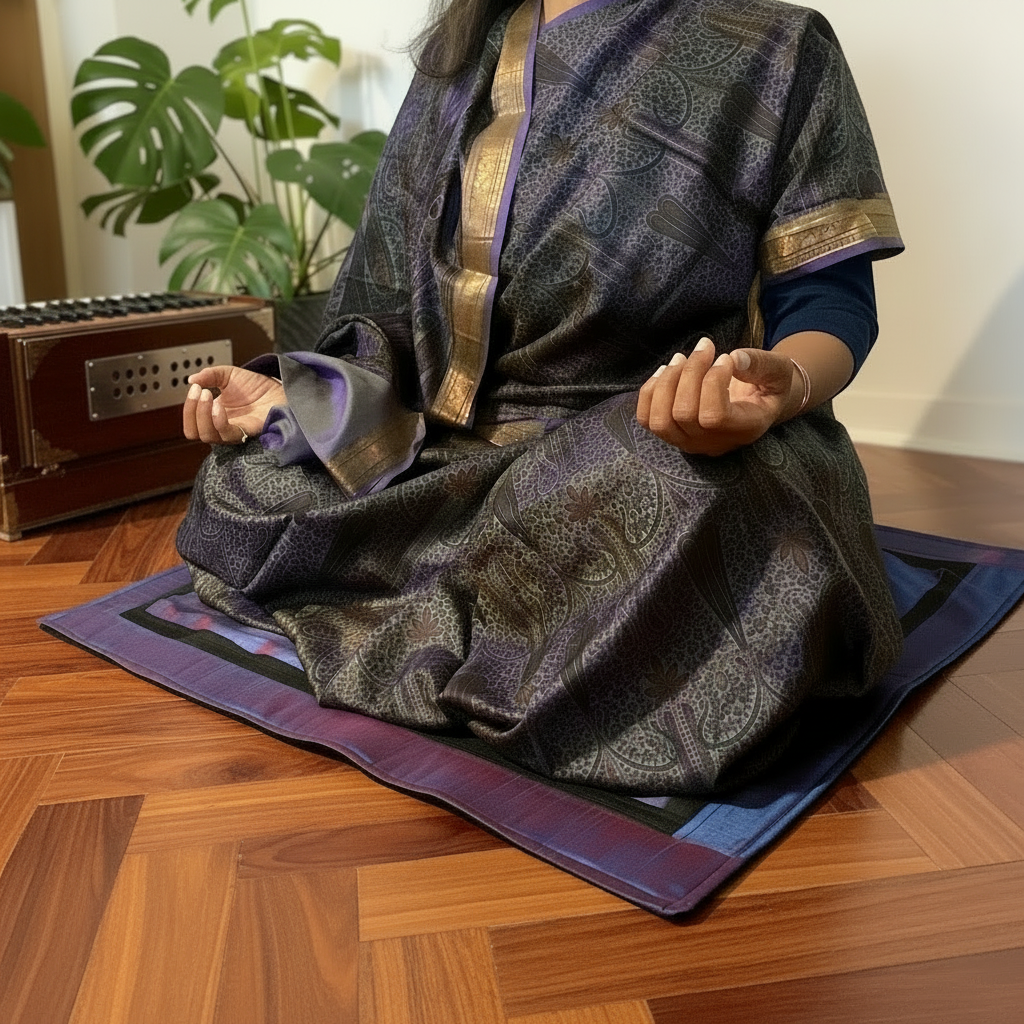
Sitting cross-legged on a raised cushion is the classic meditation posture. A firm cushion lifts the hips so the knees can settle toward the floor and the spine stacks naturally above the pelvis. A crescent or contoured shape cradles the thighs especially kindly.
Who it suits: those with reasonably open hips who like a grounded, traditional seat. Pair the cushion with a padded base mat (a zabuton) to cushion the ankles and knees. Our silk & wool floor crescent cushion is made for exactly this kind of grounded, upright floor sitting.
The kneeling bench (seiza)
A kneeling, or seiza, posture — shins on the floor, sitting back onto a small angled bench — is a wonderful middle path. It opens the hips less than cross-legged sitting, takes pressure off the knees, and naturally encourages an upright spine. Many who find cross-legged sitting hard on the hips, and a chair too passive, settle happily here.
Who it suits: those with tight hips or sensitive knees who still want to sit close to the ground. (We don’t currently make a bench, but a folded wool blanket or a firm cushion placed under the seat can create a similar kneeling support.)
The chair
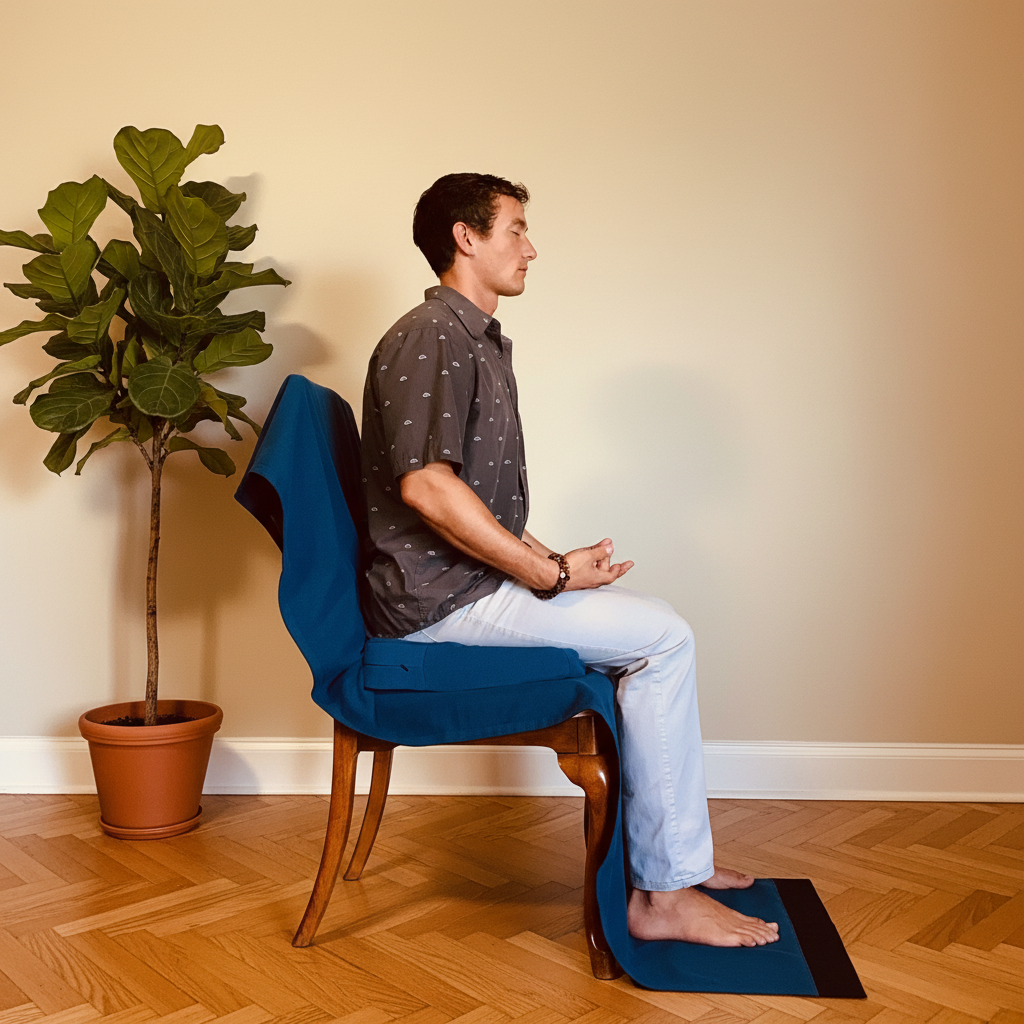
A straight, armless chair is a completely worthy meditation seat — recommended by Paramahansa Yogananda himself, and ideal for anyone whose body prefers it. The two things a chair needs are a way to correct its backward-sloping seat and a way to insulate the body.
Who it suits: those with knee, hip, or back limitations, older practitioners, and anyone who simply sits more steadily in a chair. A wedge cushion tilts the pelvis forward into an upright posture, and a silk & wool chair blanket provides the traditional insulated seat. (Our full guide to meditating in a chair walks through the whole setup.)
The mat beneath it all
Whatever you sit on, a dedicated mat defines your space and adds a layer of insulation and comfort beneath cushion, bench, or feet. A silk-and-wool asana meditation mat does this beautifully, and turns any corner into a seat set apart for practice.
How to choose
- Open hips, like the ground: a floor cushion (crescent/zafu) on a zabuton.
- Tight hips or tender knees, still want the floor: a kneeling/seiza posture.
- Knee, hip, or back issues, or you simply prefer it: a chair with a wedge and chair blanket.
- Unsure? Choose the one you can imagine sitting on, gladly, every single morning. Consistency is the whole point.
“Be calmly active and actively calm.” — Paramahansa Yogananda
A word on what it’s made of
A meditation seat is used daily and kept for years, so it is worth choosing well. We make ours from raw silk over pure wool — the materials the tradition prescribes — by hand, to hold their shape and their quiet through a lifetime of sitting. Chosen once, with care, a good seat becomes a faithful companion to the most important hour of your day, and one day the kind of thing passed on.
Ready to choose your seat? Explore our handcrafted silk & wool cushions, chair blankets, zabutons, and mats — built for upright, restful, lifelong practice.
Explore meditation cushions & blankets →Frequently asked questions
How high should my meditation cushion be?
High enough that your hips sit clearly above your knees and your pelvis tilts slightly forward, letting the lower back keep its natural curve. If your knees float well above your hips, go higher; if your hips roll forward easily, a lower cushion or wedge may suit. When in doubt, a little higher is usually kinder to the back.
Is sitting in a chair as good as the floor?
Yes. What matters is an upright spine and a relaxed body, both fully possible in a chair. See our guide to meditating in a chair.
What is a zabuton?
A zabuton is a flat, padded mat placed under your cushion or bench to cushion the knees and ankles against the floor. It pairs with a zafu or crescent cushion for a complete floor seat.
Do I really need a mat?
It’s not essential, but a mat adds comfort and insulation and marks the space as set apart for practice — which quietly helps the mind settle.
Cross-legged or kneeling — which is better?
Neither is “better.” Cross-legged suits open hips; kneeling spares the knees and hips while keeping you near the ground. Choose the one your body can hold comfortably and still.
Find the seat your body forgets — and let your practice deepen from there.

