Shanti Rudraksha & Lapis Mala — 108 Beads for Kriya & Japa
Shanti Rudraksha & Lapis Mala — 108 Beads for Kriya & Japa
108 beads for japa and Kriya practice — rudraksha, semi-precious stone, or glass, strung by hand.
Couldn't load pickup availability
9,000+ Orders Fulfilled | 520+ Five-Star Reviews Storewide | Free Shipping $75+
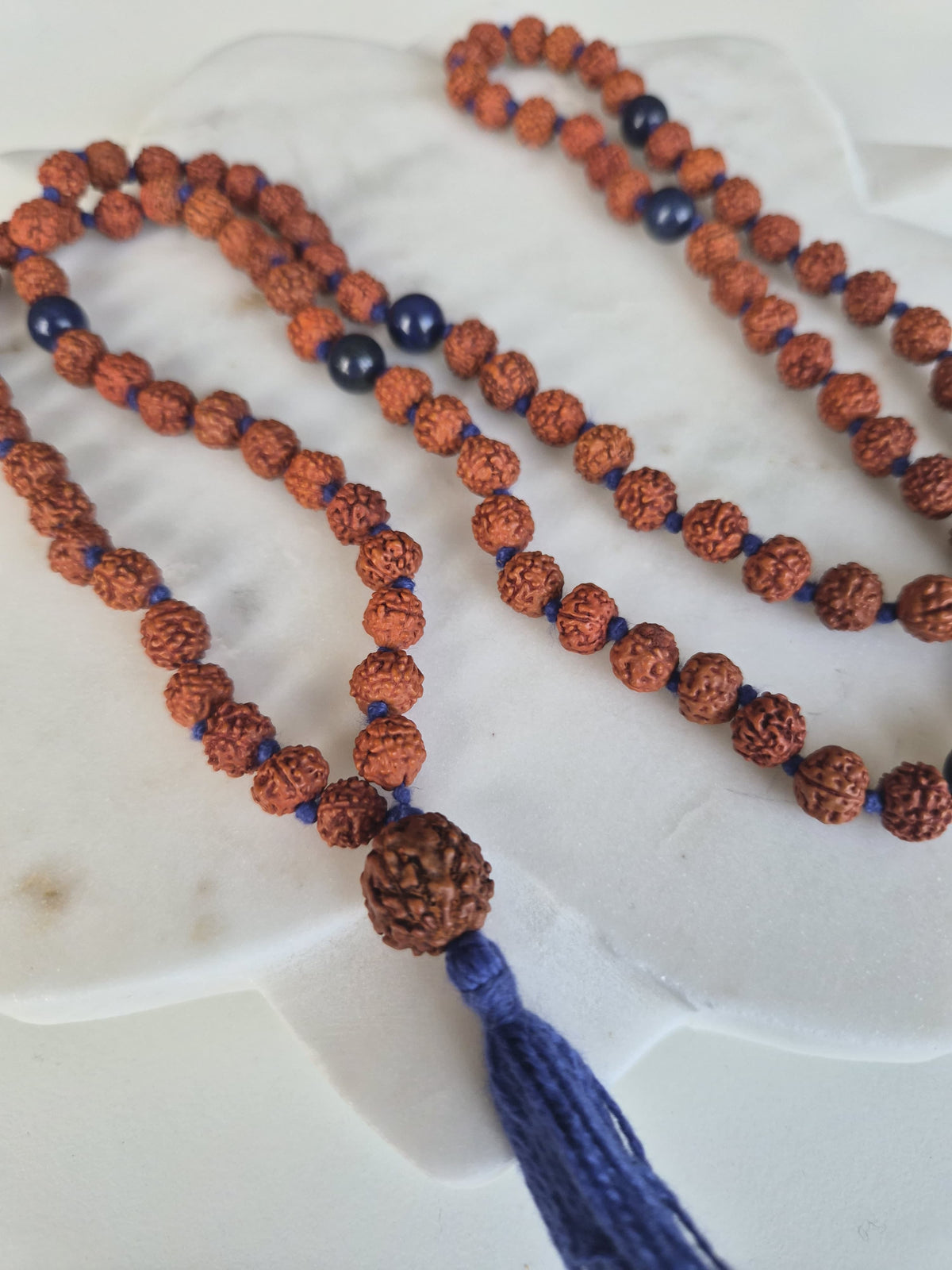
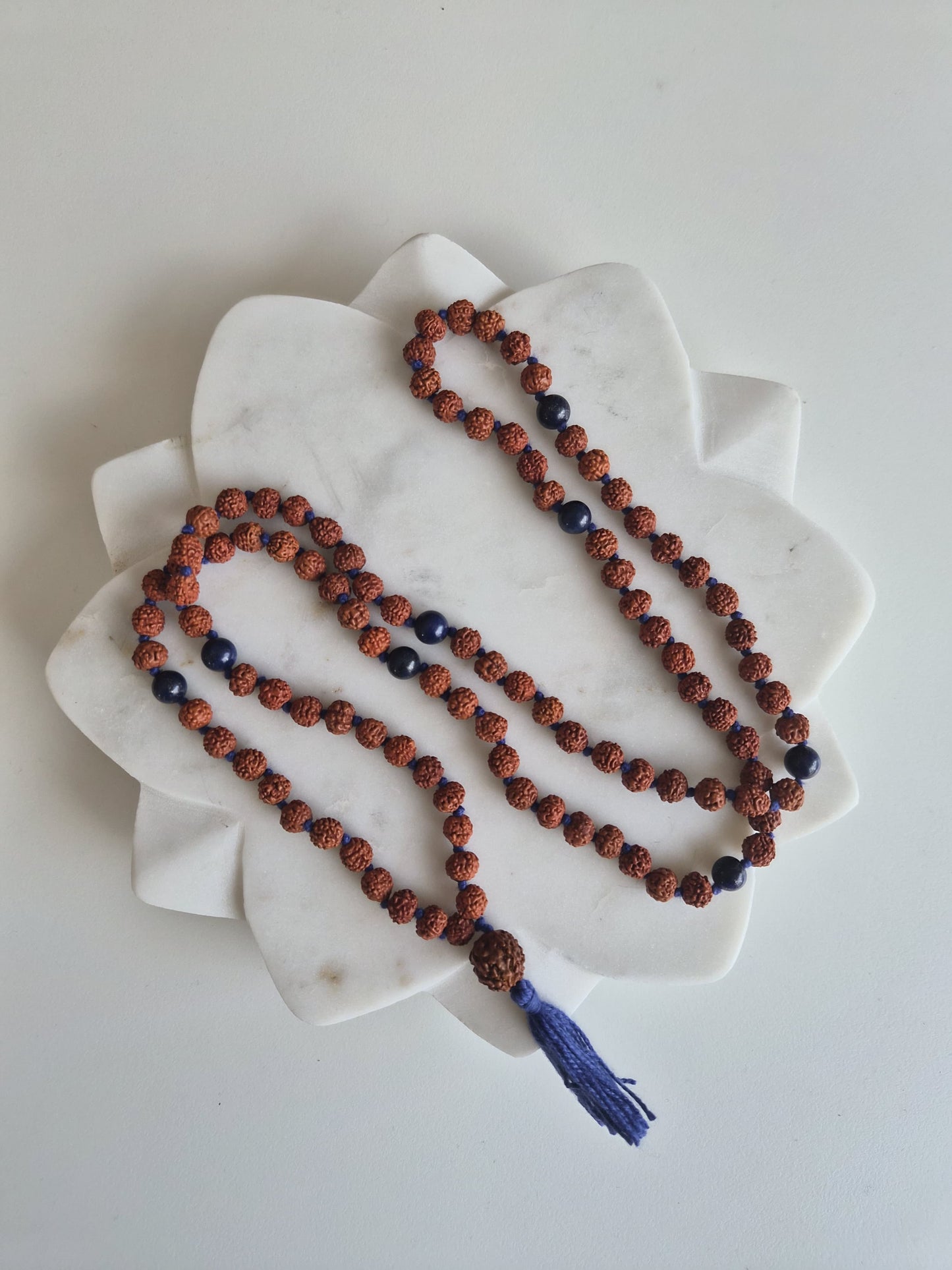
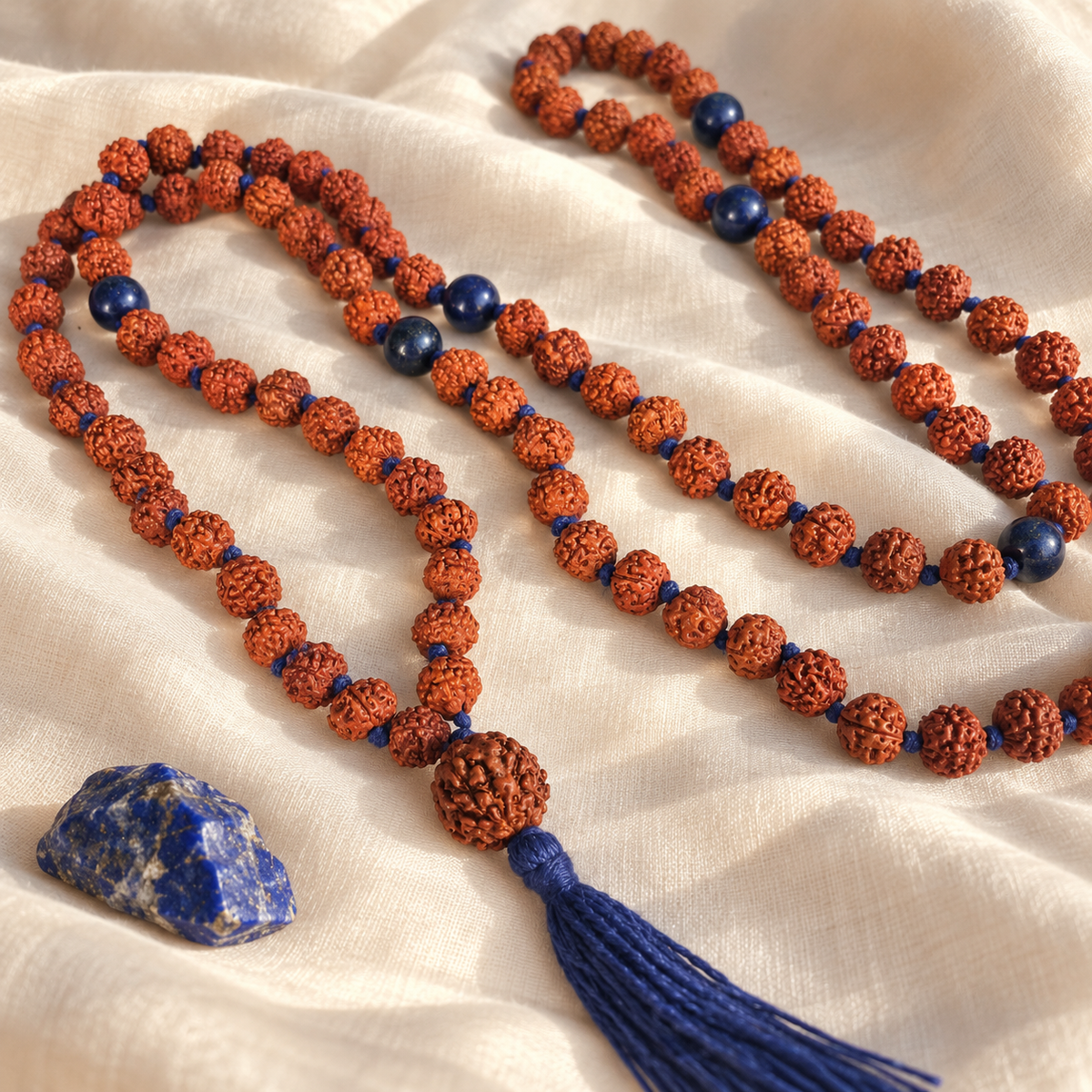
A hand-knotted 108-bead mala made for counting kriyas in daily practice and longer meditations, with a deep-blue lapis lazuli at every twelfth bead and at the Meru.
Shanti means peace. Rudraksha — the “tears of Shiva” — has been strung into malas by Himalayan yogis for centuries as a companion to japa, the seeds passing through the fingers to keep count through mantra repetition. The lapis beads fall at every twelfth count as a tactile marker for the cycle, and the Meru bead marks the round’s beginning and end.
- Rudraksha beads with lapis lazuli at every 12th count
- 108 beads plus the Meru bead
- Strung on crimson natural-fiber thread
- 8mm beads; 40 in. total length
- Handmade exclusively for Supreme Swan in Jaipur, India

Meet Pradeep
Every mala we sell is strung by hand by Pradeep, at home in Jaipur. He is not a supplier we sourced. He is a devotee, and he makes these the way a devotee makes things, which is slowly and with attention.
When we asked him for a mala marked at every twelfth bead, it took him a while to get right. Malas are made for japa, where the beads run unbroken and nothing interrupts the round. A Kriyaban needs the opposite. So Pradeep made the opposite.
Benefits
Benefits
- 108 beads — the traditional count for japa and Kriya practice
- Unique 12-count Mala available to practice Kriya Sadhana
- The texture and weight of the beads anchors attention during mantra repetition
- Each bead is a moment of return — away from distraction, back to the practice
- Can be worn throughout the day or kept at the meditation seat
Materials
Materials
- Varies by mala: rudraksha, semi-precious stones, glass, sandalwood
- All malas include a guru bead and an image of a Guru or Deity — a reminder
- No synthetic materials in beads or stringing
Traditional Context
Traditional Context
The mala is one of the oldest tools in the yogic tradition. In Kriya Yoga it has a specific function: counting repetitions of mantra or pranayama cycles. The number 108 appears throughout Sanskrit texts as a number of completion. For the serious practitioner, the mala is less a piece of jewelry and more a working instrument — it belongs at the meditation seat.
FAQ
FAQ
What is the difference between the 108-bead and 12-bead mala?
The 108-bead mala is used for full japa rounds — one mantra per bead, 108 repetitions per round. The 12-bead mala is specific to Kriya Sadhana practice and is used for counting Kriya cycles.
Which mala material is traditional for Kriya practice?
Rudraksha is the most traditional material in the yogic lineage. However any natural material — stone, sandalwood, glass — is appropriate. What matters is consistent use with the same mala over time.
How do I use the guru bead?
The guru bead marks the beginning and end of a full round. When you reach it, do not cross over it — reverse direction and begin the next round. It is a moment of pause and remembrance.
Can I wear my mala?
Yes. Many practitioners wear their mala throughout the day as a reminder of practice. Some prefer to keep one mala exclusively for sitting practice.
Shipping & Returns
Shipping & Returns
Free shipping on orders over $75. Eligible unused and unwashed U.S. orders may be returned or exchanged within 30 days of shipment. Meditation cushions may be returned within 15 days of shipment and may be tested with care. Customers pay return shipping unless the item is defective. International orders, including Canada, are not returnable. Please email orders@supremeswan.com before sending anything back.