

Paramahansa Yogananda on Posture and the Meditation Seat
Among the many things Paramahansa Yogananda taught about meditation, one of the most practical concerned the seat itself — how to sit, and what to sit upon. For the Kriya practitioner, these are not small details. The posture and the seat are the very ground on which the practice rests. Here is a gentle summary of what the master taught about sitting for meditation, and how to put it into practice today.
The upright spine
Above all, Yogananda emphasized an erect spine. The body should be upright but relaxed — the spine straight, the chest open, the shoulders easy, the hands resting in the lap, and the whole posture held without strain. A collapsed or slouching posture, he taught, dulls the attention and lets energy sink; an upright spine keeps the body alert and allows the life-force to rise, supporting a deeper, stiller meditation. The aim is not military stiffness but an effortless uprightness the body can hold in comfort.
The wool-and-silk seat
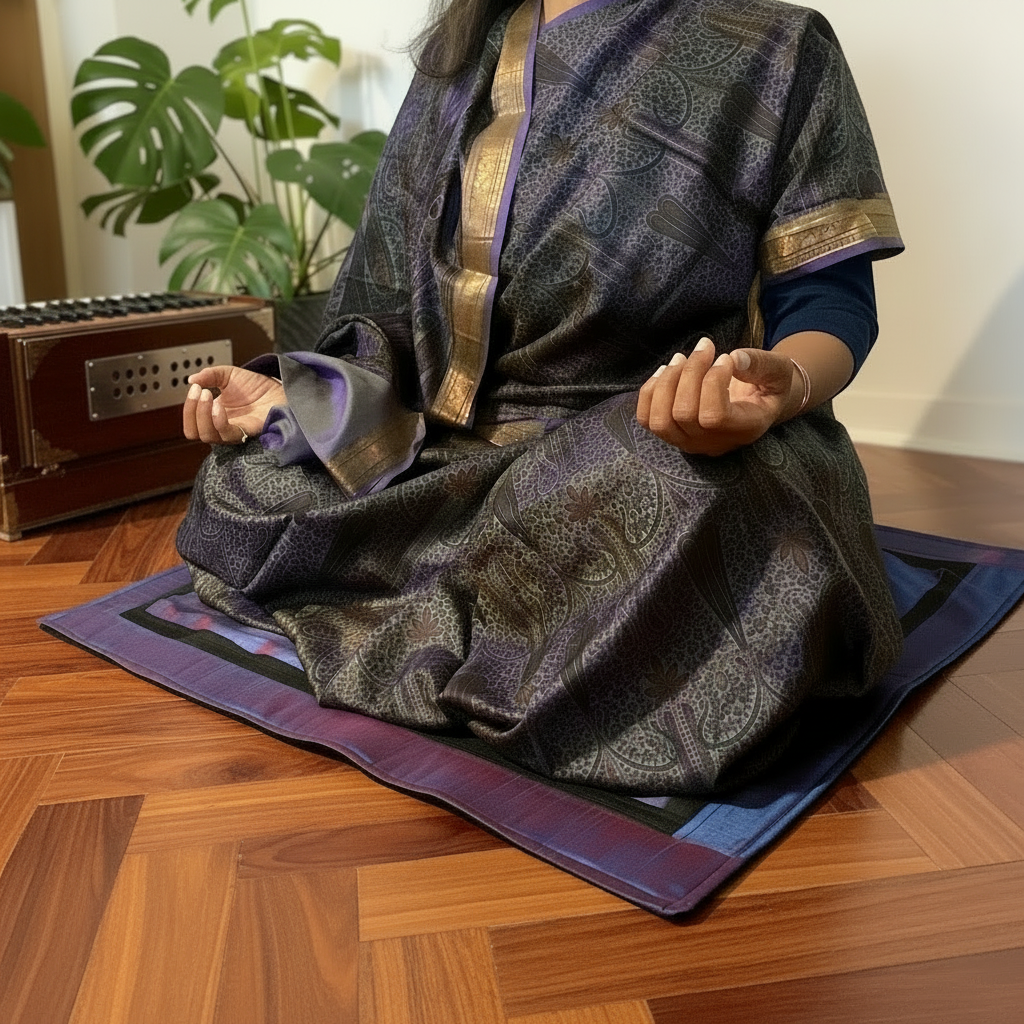
Yogananda also gave specific instruction about what to sit upon. He advised the meditator to use a covering of wool and silk — wool beneath and silk on top — over the meditation seat, drawing one end beneath the feet. This covering, he taught, helps insulate the body from the subtle downward pull of the earth’s currents, whose tendency toward material perception is undesirable for the meditating devotee. It is why, for over fifteen years, we have made our cushions, blankets, and mats from raw silk over pure wool — following the tradition he prescribed. You can read more in our piece on the tradition behind the silk and wool seat.
Floor or chair — both are welcome
Importantly, Yogananda taught that one may meditate equally well on the floor or in a straight, armless chair. What matters is the upright spine and the relaxed body, not whether the legs are crossed. He even gave instruction for the chair: drape the wool-and-silk cloth over the back of the chair, with one end on the floor beneath the feet. This is a great kindness to anyone whose knees, hips, or back make floor-sitting difficult — the chair is not a lesser seat, but a fully worthy one. (See our complete guide to meditating in a chair.)
Putting it into practice
To sit as the tradition teaches:
- Choose your seat — a firm floor cushion, or a straight chair with a wedge cushion to bring the spine upright.
- Cover the seat with a wool-and-silk blanket or sit upon a silk-and-wool mat, letting an end rest beneath the feet.
- Sit with the spine erect and the body relaxed, hands in the lap, and turn within.
“Be calmly active and actively calm.” — Paramahansa Yogananda
For more on the body in meditation, see our posts on why your meditation posture is crucial and how meditation starts with sitting.
Sit as the tradition teaches. Explore our silk & wool cushions, chair blankets, and mats — handcrafted to Yogananda’s instructions for an upright, insulated, lifelong seat.
Explore meditation seats →Frequently asked questions
Did Yogananda say you can meditate in a chair?
Yes. He taught that a straight, armless chair is entirely suitable, and even gave instruction for draping the wool-and-silk cloth over it. What matters is the upright spine, not the crossed legs.
Why wool and silk?
Yogananda taught that wool and silk insulate the body from the earth’s subtle downward currents, supporting a calmer, more inward meditation. They are also warm and long-lasting. See our silk and wool article.
How straight does my spine need to be?
Upright but relaxed — the natural curve of the lower back preserved, the chest open, no strain. A cushion or wedge that tilts the pelvis forward makes this far easier to hold.
What if I can’t sit cross-legged?
Then sit in a chair, with a wedge to bring the spine upright and a blanket to insulate the seat. It is a fully worthy way to practice.
However you sit, let the spine rise and the body rest — and meet the silence within.

