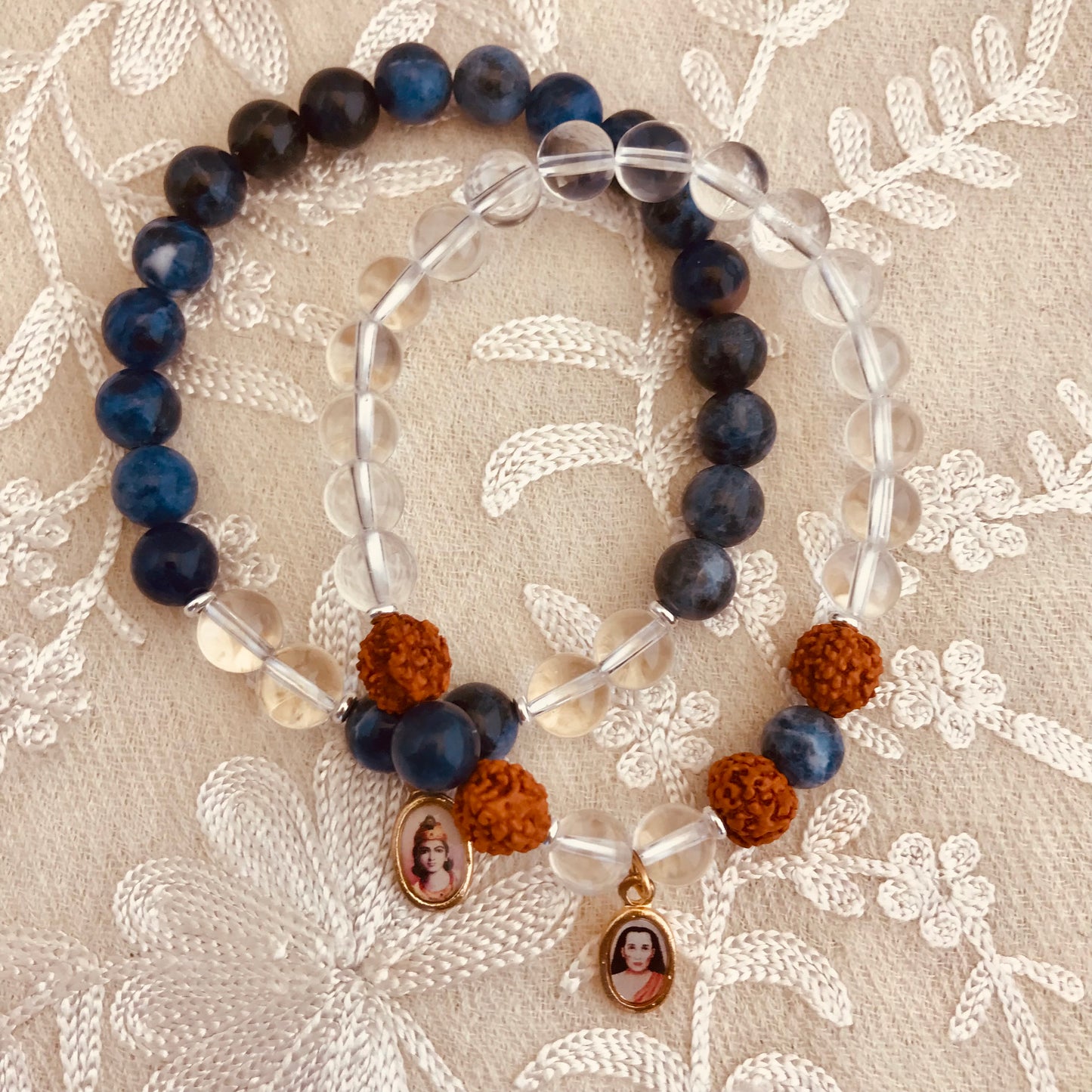


Babaji Wrist Mala Bracelet
Babaji Wrist Mala Bracelet
5.0 / 5.0
(3) 3 total reviews
108 beads for japa and Kriya practice — rudraksha, semi-precious stone, or glass, strung by hand.
Couldn't load pickup availability
⭐ 264 Reviews | Ethically Sourced | Free Shipping $75+ | Serving Seekers Since 2009
The Babaji Wrist Mala Bracelet was created with elements that remind us of Himalayan Yogis such as icy clear quartz, deep blue sodolite and of course, the Himalayan Rudraksha beads.
- Made of deep blue Sodolite, clear Quartz Crystal, Sterling Silver findings, Rudraksha beads and a tiny charm of Mahavatar Babaji.
Sodalite is known to aid in rational thought, facing truth and dealing it with objectivity and vocalization of ones feelings.
Quartz Crystal is known as the “Great Healer” for its ability to absorb, store, release and regulate energy. It also is known to enhance the qualities of the other gemstones that are worn with it.
Rudraksha is the seed of a broad-leafed evergreen tree found mainly in the Himalayan foothills. It is believed that wearing these beads bring clarity, and create positive energy for the body, mind and soul. Rudraksha means "Tears of Shiva" and are known to retain sacred vibrations of one's mantras and prayers.They are the eternal symbol of a Himalayan Yogi.
- It has 24 beads. This makes it easy for counting kriyas or counting Japa. This makes it available in only one size to accommodate the correct number of beads. It is approximately 8 1/4 “ in radius.
This beautiful wrist mala bracelet was designed and handcrafted by us at Supreme Swan in Southern California from all natural materials.
Benefits
Benefits
- 108 beads — the traditional count for japa and Kriya practice
- Unique 12-count Mala available to practice Kriya Sadhana
- The texture and weight of the beads anchors attention during mantra repetition
- Each bead is a moment of return — away from distraction, back to the practice
- Can be worn throughout the day or kept at the meditation seat
Materials
Materials
- Varies by mala: rudraksha, semi-precious stones, glass, sandalwood
- All malas include a guru bead and an image of a Guru or Deity — a reminder
- No synthetic materials in beads or stringing
Traditional Context
Traditional Context
The mala is one of the oldest tools in the yogic tradition. In Kriya Yoga it has a specific function: counting repetitions of mantra or pranayama cycles. The number 108 appears throughout Sanskrit texts as a number of completion. For the serious practitioner, the mala is less a piece of jewelry and more a working instrument — it belongs at the meditation seat.
FAQ
FAQ
What is the difference between the 108-bead and 12-bead mala?
The 108-bead mala is used for full japa rounds — one mantra per bead, 108 repetitions per round. The 12-bead mala is specific to Kriya Sadhana practice and is used for counting Kriya cycles.
Which mala material is traditional for Kriya practice?
Rudraksha is the most traditional material in the yogic lineage. However any natural material — stone, sandalwood, glass — is appropriate. What matters is consistent use with the same mala over time.
How do I use the guru bead?
The guru bead marks the beginning and end of a full round. When you reach it, do not cross over it — reverse direction and begin the next round. It is a moment of pause and remembrance.
Can I wear my mala?
Yes. Many practitioners wear their mala throughout the day as a reminder of practice. Some prefer to keep one mala exclusively for sitting practice.
Shipping & Returns
Shipping & Returns
Free shipping on orders over $75. Ships worldwide. 30-day return policy for unused items in original packaging.
Share