

How to Meditate in a Chair: Posture, Support & Setup
There is an old idea, quietly held by many of us, that “real” meditation happens cross-legged on the floor — and that to sit in a chair is somehow to settle for less. It is worth letting that idea go. A great many devoted practitioners, including some of the most dedicated, meditate in a chair: those with knees or hips that protest the lotus, those who sit for long stretches, those who simply find the body steadier and the mind freer when the legs are at rest. The chair is not a compromise. It is a perfectly worthy seat — provided you set it up with the same care you would give any sacred thing.
Paramahansa Yogananda himself taught that a straight, armless chair is an entirely suitable place to meditate. What matters is not whether you sit on the floor or in a chair, but whether the spine is upright, the body is at ease, and the seat supports rather than fights you. This guide walks through exactly how to do that.
Why meditate in a chair at all?
The purpose of any meditation posture is the same: to hold the spine erect and the body relaxed, so that attention can turn inward without the constant tug of discomfort. For floor sitting, that often takes years of opening the hips. A chair offers the same upright spine with far less strain on the knees and ankles — which means you can give your attention to the practice itself, not to an aching joint.
A chair is also simply practical. It travels well to a meditation center, it suits an aging body with grace, and it makes a daily sitting more likely to actually happen. And the longer you can sit without distraction, the deeper the stillness you are able to reach.
The ideal chair meditation posture
The aim is an upright, effortless spine — supported by its own natural curve rather than held up by muscular effort. Here is how the body wants to sit:
Feet
Plant both feet flat on the floor, about hip-width apart, with the knees bent at roughly a right angle. If your feet do not comfortably reach the floor, rest them on a folded blanket or a low cushion so they feel grounded and supported.
Hips and the base of the spine
Sit toward the front third of the chair, so you are balanced on your sitting bones rather than slumped against the backrest. This is the single most important detail — and the one chairs make hardest, for reasons we will come to.
The spine
Let the spine rise tall from the pelvis, keeping its gentle natural curve at the lower back. The chest opens, the shoulders settle down and back, and the crown of the head lifts softly toward the ceiling, as if suspended by a thread.
Hands, chin, and gaze
Rest the hands on the thighs or in the lap, palms up. Draw the chin very slightly inward so the neck continues the line of the spine. Let the eyes close, or keep a soft, unfocused gaze. Then simply breathe, and begin.
The two quiet problems a chair creates — and how to solve them
Chairs are built for resting, not for meditation, and that creates two predictable obstacles. The good news is that each has a simple, time-honored solution.
Problem one: the chair tips you backward
Almost every chair seat slopes gently backward. That slope rolls your pelvis back and collapses the natural curve of your lower back — so you either slump, or you fight to stay upright the entire sitting. Neither is restful.
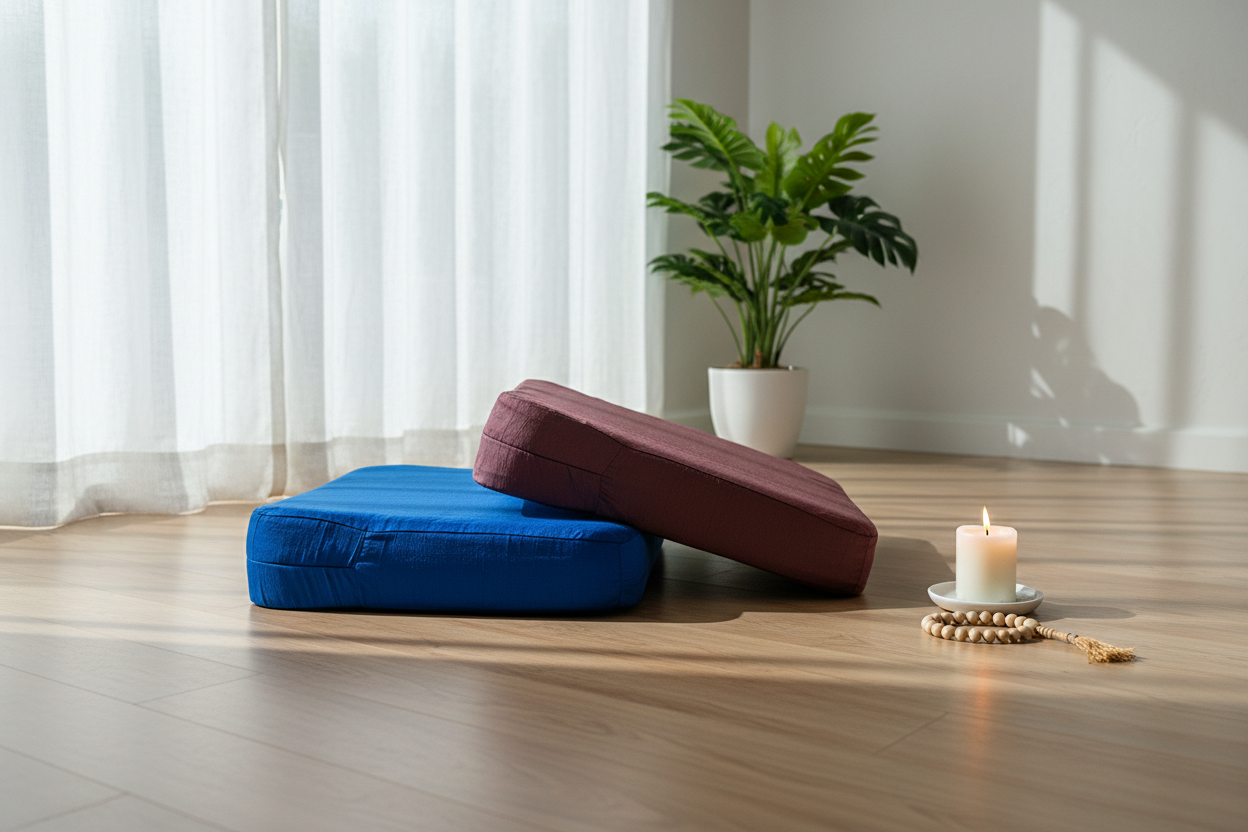
The remedy is a wedge cushion: a seat tapered higher at the back than the front, which tilts the pelvis forward into its natural position. With the pelvis rolled gently forward, the lumbar curve returns on its own, the chest opens, the breath deepens, and the back muscles can finally relax. Our Silk & Wool Wedge Meditation Cushion was designed for exactly this — shaped, with the help of posture experts, to the precise angle that frees the spine on an ordinary chair.
★★★★★
“The tilt helps to keep you in a very natural posture with the back straight. Very comfortable, very well made… one of the very best meditation cushions I have used so far.”
— Danny, on the Silk & Wool Wedge
Problem two: the seat draws your energy downward
The second obstacle is subtler. In the yogic tradition, the meditator is taught to sit on a covering of wool and silk — wool beneath, silk on top — to insulate the body from the subtle downward pull of the earth’s currents, so that energy can rise and settle the mind. Yogananda gave this instruction plainly: drape a woolen or silk cloth over your chair, with one end falling to the floor beneath your feet.
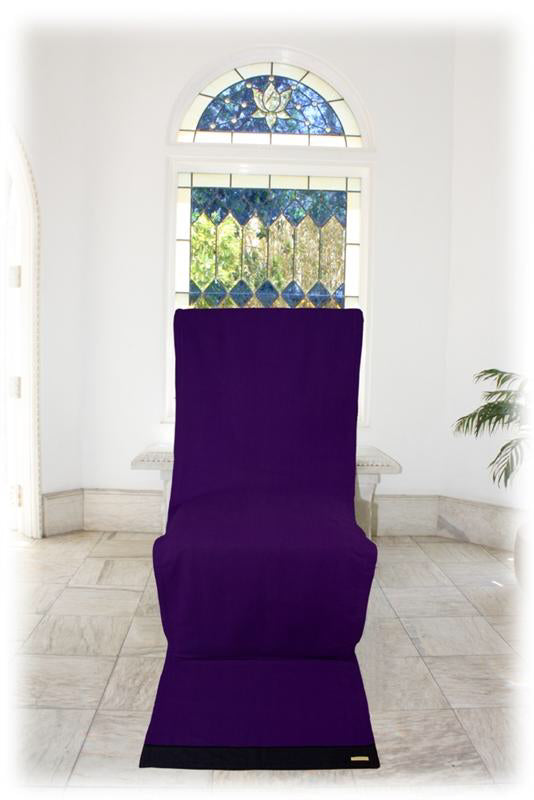
This is the role of a silk and wool meditation chair blanket — it covers the seat and back of the chair and extends down under the feet, giving you the traditional insulated seat on any ordinary chair. Warmth, stillness, and an undisturbed body, all from a single piece of cloth.
A simple five-minute setup for daily sitting
- Choose a straight-backed, armless chair and place it where you will not be disturbed.
- Drape your wool-and-silk blanket over the chair, letting one end rest on the floor for your feet.
- Set your wedge cushion on the seat, thick edge to the back, to tilt the pelvis gently forward.
- Sit toward the front third of the seat, feet flat and grounded, spine tall and easy.
- Rest the hands, soften the gaze, draw the chin in slightly — and turn within.
Keep this seat in one quiet corner, ready, and it becomes a small altar of its own — a place the mind learns to associate with stillness. As Yogananda reminded us:
“Calmness is the living breath of God’s immortality in you.” — Paramahansa Yogananda
A note on the seat you keep
A meditation seat is not décor, and it is not a thing to replace each year. Made well — silk over pure wool, by hand — it holds its shape and its quiet through years of daily use, growing more familiar with each sitting, until one day it is the kind of thing passed on to someone who comes after you. Chosen once, with care, it serves the most important hour of your day for a very long time.
Setting up your chair for practice? Our wedge cushion and silk & wool chair blanket were made for exactly this — handcrafted in California, to Yogananda’s instructions, since 2009.
Explore meditation cushions & blankets →Frequently asked questions
Should I sit forward, or can I lean back against the chair?
Sitting toward the front, balanced on your sitting bones, gives the most alert and upright spine. But if you need support — because of fatigue, illness, or a back condition — it is perfectly fine to rest against the backrest. A small firm cushion at the lower back helps preserve the lumbar curve. Comfort that lets you stay present is always better than a “perfect” posture you cannot hold.
How long should I meditate in a chair?
Begin with whatever you can sit with comfortably — even ten or fifteen minutes — and let it lengthen naturally as the body settles. A well-supported chair posture makes longer sittings far easier, which is rather the point.
What if my feet don’t reach the floor?
Place a folded blanket, a low cushion, or a book under your feet so they rest flat and supported. Grounded feet steady the whole posture.
Is meditating in a chair really as “good” as sitting on the floor?
Yes. What matters is an upright spine, a relaxed body, and a still, attentive mind — and all three are entirely available in a chair. The posture serves the practice; it is not the practice itself.
Why wool and silk, specifically?
The tradition holds that wool and silk insulate the body from the earth’s subtle downward currents, supporting a calmer, more inward sitting. Beyond the subtle effect, they are simply warm, beautiful, and made to last — which is why we have made our seats from them for over fifteen years. You can read more in our piece on the tradition behind the silk and wool meditation seat, and on posture itself in why your meditation posture is crucial.
However you sit, may your practice be steady and your stillness deep.

