

Rudraksha, Sphatik or Sandalwood: Choosing Your Mala Material
A mala is one of the most personal objects in a spiritual life. You will hold it close, bead by bead, through thousands of repetitions — so the material you choose is not a small decision. Each one carries its own feel beneath the thumb, its own tradition, and its own quiet effect on the mind. This is a gentle guide to the most loved mala materials, so you can find the one that truly belongs in your hand.
If you are still deciding on the basics — 108 beads, the guru bead, and how a mala is used — our companion piece on choosing your mala is a lovely place to begin. Here, we go deeper into the material itself.
Why the material matters
In japa, the same bead passes under your thumb again and again, and the mind quietly takes on the quality of what it touches. The tradition holds that different materials carry different energies — some grounding, some cooling, some awakening devotion. Beyond the subtle, there is the simple, practical truth: a bead that feels right in your fingers, and an image that draws your heart, will call you back to practice. Choose the one you will actually want to hold each day.
Rudraksha — the classic yogi’s bead
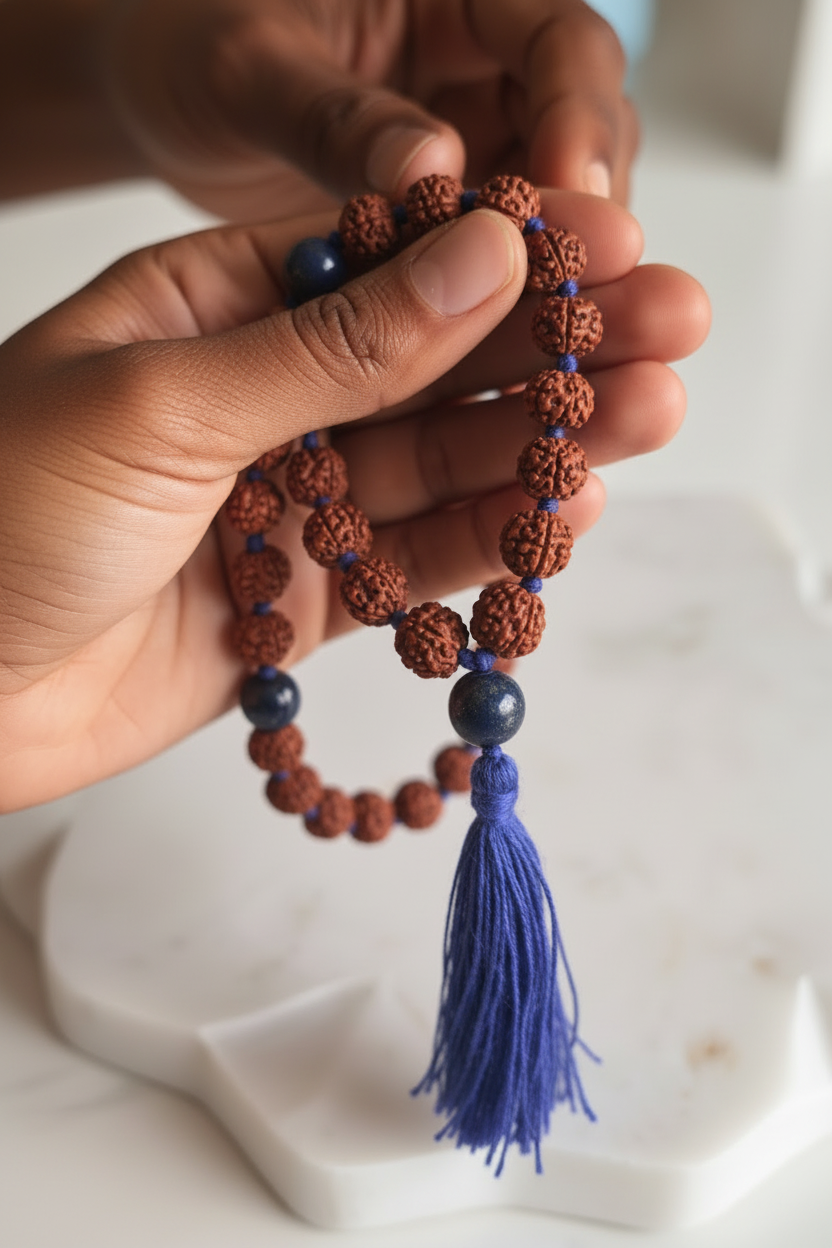
Rudraksha seeds are the traditional bead of the meditating yogi, worn for centuries by sadhus and householders alike. They are prized for being grounding and protective, for steadying the mind and calming the nervous system — qualities that make them a natural companion for daily japa and Kriya practice. Light, warm to the touch, and growing smoother and darker with the oils of years of use, a rudraksha mala is the one many devotees return to for a lifetime.
For those who love the grounding of rudraksha with a touch of stone energy, a combination mala such as the Gurukripa rudraksha & crystal mala joins rudraksha with quartz for both steadiness and clarity.
Sphatik (crystal quartz) — cooling and clear
Sphatik, or clear crystal quartz, has long been valued for its cooling, calming quality — said to soothe an overheated or restless mind and bring clarity to the thoughts. The beads are cool and smooth, slipping easily under the thumb, which makes a sphatik mala especially pleasant for longer sittings. Many in the Kriya tradition keep a crystal mala for its clarifying, quieting feel; our Kriya Sadhana sphatik mala pairs the crystal with lapis for a beautiful, focused practice piece.
Sandalwood (chandan) — fragrance and devotion
Sandalwood has been beloved in Indian devotional life for millennia. Its gentle, warming fragrance — released a little more each time you hold the beads — is said to calm the senses and awaken bhakti, the heart’s devotion. A sandalwood or fragrant wooden mala is light, soft, and warm in the hand, and over the years the scent and patina deepen into something wholly your own. For those drawn to devotion through the senses, a fragrant wooden mala is a beautiful choice. (Browse the current malas collection for what is in stock.)
Other sacred stones at a glance
Beyond the three classics, many devotees are drawn to a particular gemstone — for its beauty, its tradition, or the quality it is said to support. A few favorites:
- Lapis lazuli — deep celestial blue, associated with insight, truth, and inner vision.
- Rose quartz — soft pink, the stone of the heart, gentleness, and compassion.
- Tiger’s eye — warm golden-brown, associated with grounding, courage, and steadiness.
- Obsidian — protective black volcanic glass, for clearing and grounding.
- Lava stone — porous and earthy, and able to hold a drop of essential oil for fragrance as you sit.
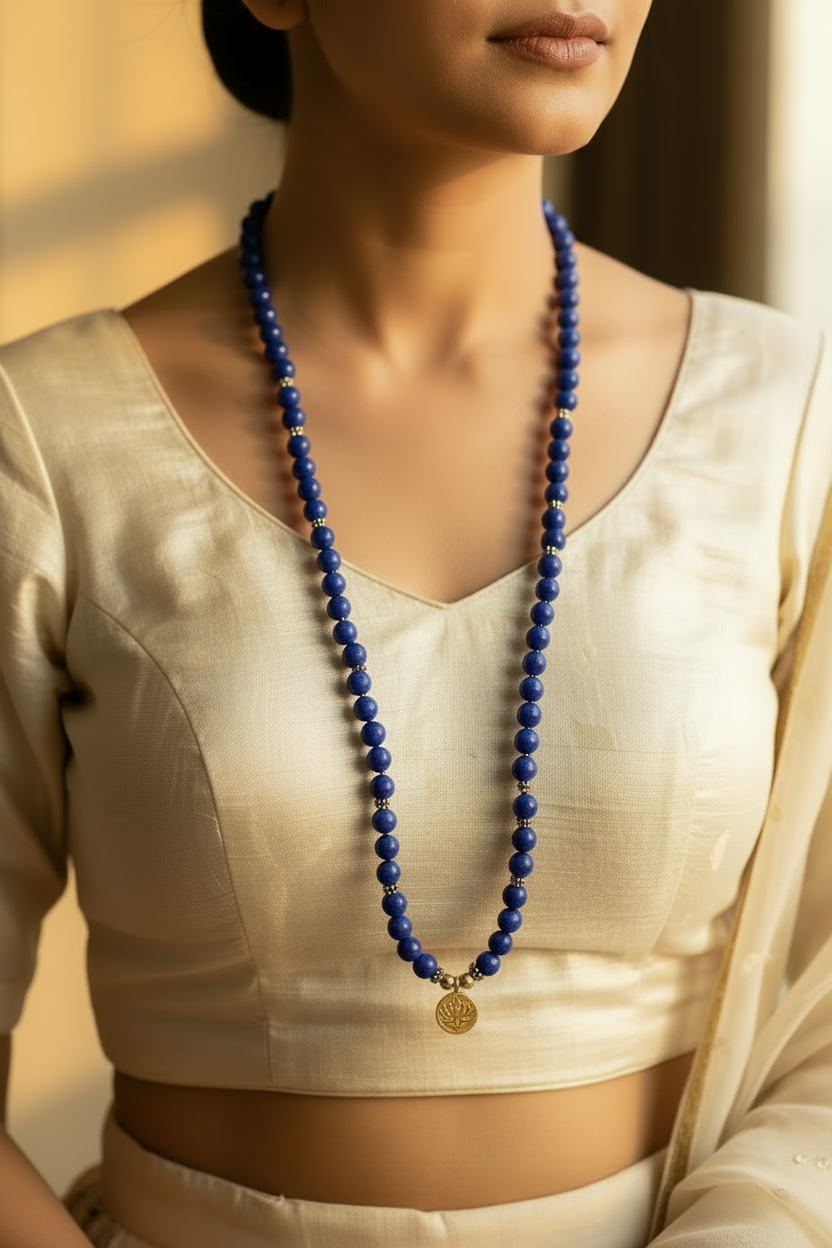
A stone mala such as the Satya lapis lazuli mala brings both beauty and meaning to the hand — and you can see the full range in the meditation malas collection.
How to choose the one that calls to you
A few gentle questions to guide you:
- What is your practice? For counted japa over long sittings, smooth, easy-running beads like rudraksha or sphatik are a joy under the thumb.
- What quality do you wish to invite? Grounding (rudraksha), clarity (crystal), devotion (sandalwood), or the particular meaning of a stone.
- What draws your heart? In the end, the right mala is often simply the one you feel pulled toward. Trust that pull — devotion matters more than any rule.
“Chanting is half the battle.” — Paramahansa Yogananda
Caring for your mala
Treat your mala as the sacred object it is. Keep it somewhere clean and respectful when not in use — on your altar, or in a small cloth pouch. Let rudraksha and sandalwood stay dry (they deepen beautifully with the natural oils of your hands over time), and wipe stone beads gently with a soft cloth. Cared for in this way, a good mala will be with you for many years — and, in time, becomes the kind of thing quietly passed on.
Looking for the mala that belongs in your hand? Explore our handcrafted rudraksha, crystal, and gemstone malas — made for japa and daily practice. And remember: every shawl comes with a free 108-bead rudraksha mala, given with our gratitude.
Explore meditation malas →Frequently asked questions
How many beads should a mala have?
A traditional mala has 108 counting beads plus one larger “guru” bead, which marks the beginning and end of a round. Smaller malas of 27 or 54 beads (and wrist malas) are also used for shorter practice.
Does the material really make a difference?
Practically, yes — different materials feel different under the thumb and suit different lengths of practice. Traditionally, each is also associated with its own quality (grounding, cooling, devotional). Most important is choosing one you will love to hold daily.
Which mala is best for a beginner?
Rudraksha is a wonderful first mala — traditional, grounding, affordable, and easy to care for. A simple crystal or sandalwood mala is also a lovely place to begin.
Can I wear my mala, or should I only use it for japa?
Both are traditional. Many devotees wear the mala to keep its presence near, and also use it for counted japa. If you prefer, you can keep a dedicated mala for practice and another to wear.
Rudraksha or crystal for japa?
Both are excellent. Rudraksha is grounding and warm; crystal (sphatik) is cooling and clarifying, and runs very smoothly for long counting. If you tend toward a busy mind, many find sphatik especially calming; if you seek steadiness, rudraksha is the classic choice. A combination mala gives you a little of each.
Whichever you choose, may it serve your practice faithfully, bead by bead.

