

Building a Daily Meditation Practice That Lasts
Almost everyone who meditates has begun many times. The difficulty is rarely the sitting itself — it is the returning, day after day, until practice becomes as natural as sleep. A lasting practice is not built on willpower or long, heroic sessions. It is built on small, kind, repeatable habits. Here are the ones that matter most.
Consistency over length
A few quiet minutes every day will carry you further than an hour once a week. The mind learns stillness through repetition, not duration. So begin with a length you can keep without dread — even five or ten minutes — and let it grow on its own as the practice becomes a comfort rather than a chore. The goal is an unbroken thread, not a perfect session.
Same time, same place
Anchor your practice to a fixed time — most often early morning, before the day crowds in, or evening as it winds down — and to a fixed spot. As Yogananda reminded us, “Environment is stronger than will power.” A seat you return to each day quietly does much of the work for you: the mind begins to settle the moment you arrive, simply because it has learned that here, we become quiet.
“Environment is stronger than will power.” — Paramahansa Yogananda
Make the seat inviting
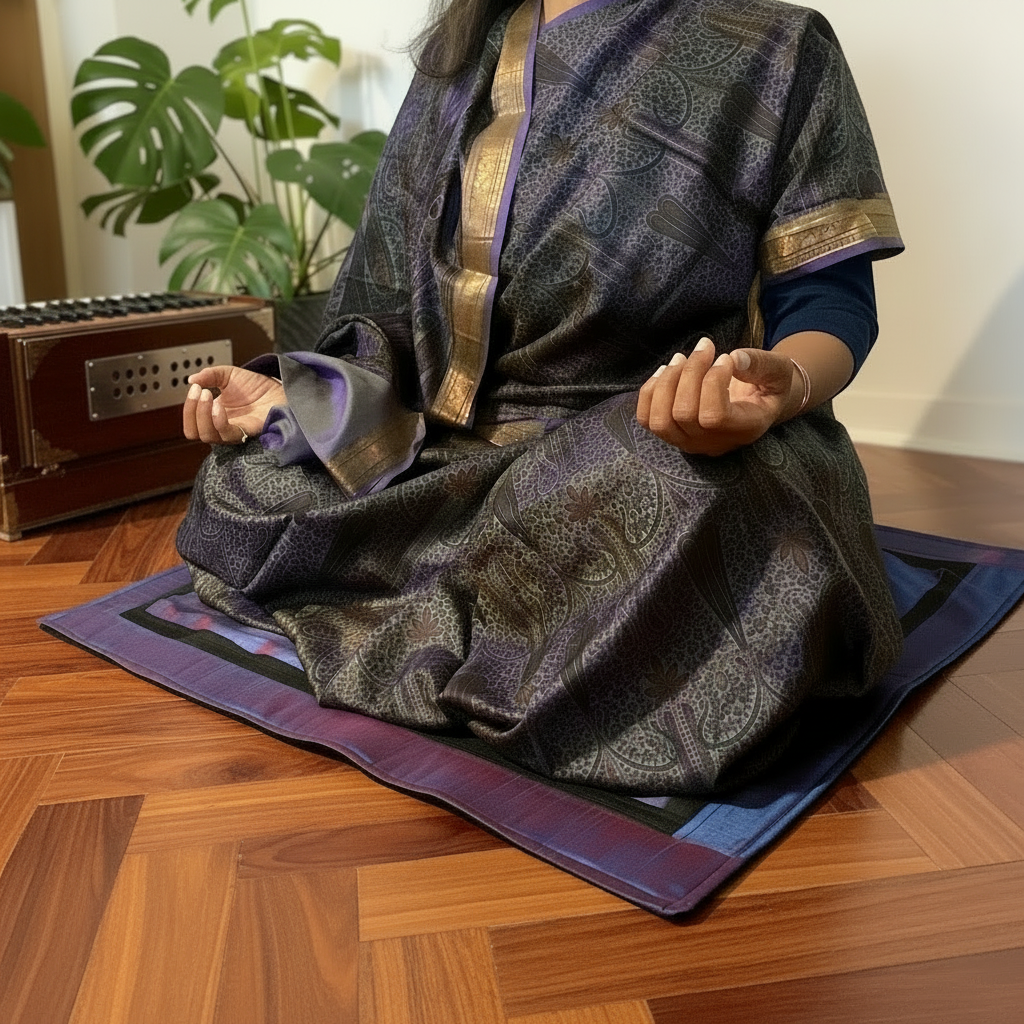
You are far more likely to return to a place that welcomes you. A comfortable, dedicated seat that keeps the spine upright without strain removes the most common excuse — bodily discomfort. A small altar nearby gives the eye and heart a place to rest. Together they turn a corner of your home into a place the mind looks forward to. (If you sit in a chair, here is how to set it up well; unsure which seat suits you? See choosing your meditation seat.)
Give the mind an anchor
A wandering mind is not a failure — it is simply what minds do. Give yours something gentle to return to: the breath, or the repetition of a mantra. Japa on a mala is a beautiful anchor for exactly this, giving the restless mind one sacred thing to hold. Each time you notice you have drifted, simply come back — without judgment. That returning is the practice.
Be gentle, and don’t break the chain
Some days will be deep and some distracted; both are part of the path. If you miss a day, simply begin again the next — no guilt, no grand restart required. The practitioners who last are not the ones who never falter, but the ones who return kindly, again and again. A short sit on a hard day keeps the thread unbroken far better than waiting for the perfect conditions that never quite come.
Set up a practice you’ll return to. Explore our handcrafted seats, malas, altars, and incense — thoughtfully made to make daily meditation a place you look forward to.
Explore our bestsellers →Frequently asked questions
How long should I meditate as a beginner?
Begin with five to ten minutes daily — short enough that you’ll actually do it. Let the length grow naturally as the habit takes hold. Consistency matters far more than duration.
What time of day is best?
Early morning is traditional and often easiest to protect, but the best time is the one you can keep faithfully. Pick a fixed time and guard it gently.
I can’t stop my mind from wandering — am I doing it wrong?
No. A wandering mind is normal. The practice is simply noticing and returning — to the breath, or to a mantra — again and again. A mala can help give the mind an anchor.
What if I miss days?
Just begin again the next day, without guilt. A practice is built by returning, not by being perfect.
Begin small, return gently, and let the days quietly accumulate into a life of practice.

