

The Role of Incense in Daily Practice (and How to Choose)
Long before a word is spoken or a mantra begun, the lighting of incense quietly changes a room. A thread of fragrant smoke rises, the air softens, and something in the body remembers: it is time to turn within. For thousands of years, incense has accompanied prayer and meditation across the world’s traditions — not as decoration, but as a gentle aid to devotion. This is a look at why it helps, and how to choose a scent worthy of your practice.
Why incense belongs in practice
Incense serves the meditator in three quiet ways. It prepares the space, clearing and consecrating the air so the room feels set apart. It settles the senses, giving the restless mind a single, pleasant thing to rest on as you begin. And in time it becomes a signal — the scent itself, repeated each day, tells the mind that the hour of stillness has come, and the body begins to quiet before you have even sat down. For many, it is also a simple offering: a small daily gesture of love and gratitude at the altar.
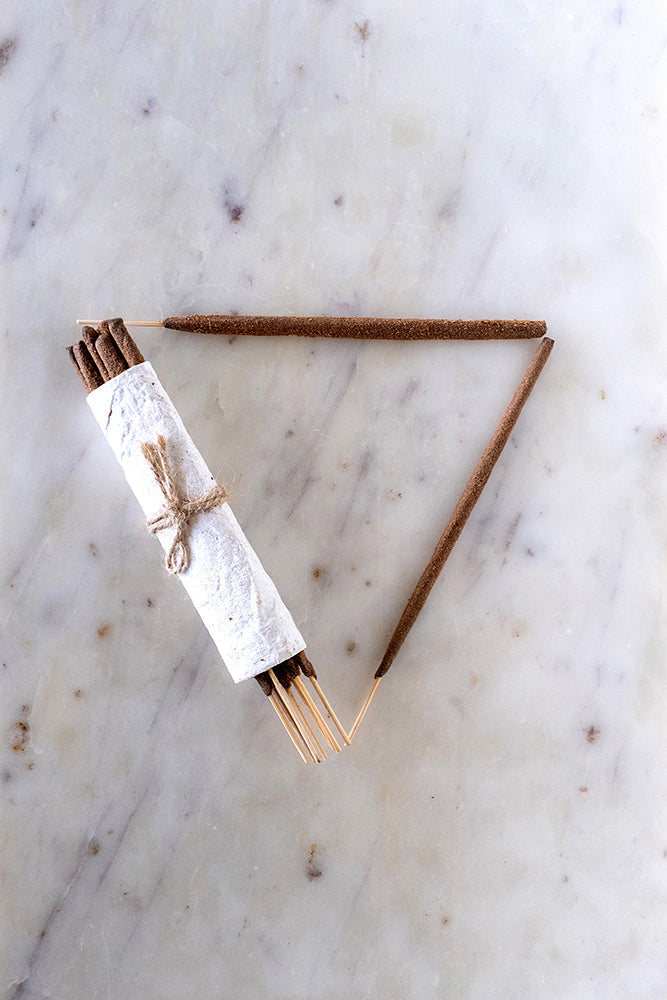
Choosing your scent
Each fragrance carries its own mood. A few beloved choices:
- Sandalwood — warm, grounding, and deeply traditional; the classic scent of devotion and calm. (Try our Sweet Sandalwood.)
- Rose — soft and opening, associated with the heart and bhakti. (See Pure Rose.)
- Lotus — cool, clean, and uplifting, the flower of spiritual unfolding. (See Red Lotus.)
- Copal — bright and resinous, prized for clearing and purifying a space. (See White Copal.)
If you are unsure, a variety bundle is a lovely way to discover which scent quiets your mind best.
What to look for in a good incense
Not all incense is equal. Seek out incense that is natural and handrolled, made from real flowers, resins, and essential oils rather than synthetic perfumes and charcoal fillers, which can smell harsh and smoke heavily. Our TriDēvī incense is handrolled in small batches by a family of third-generation master artisans in Mysore, India, from all-natural ingredients — a potent, clean aroma that fills a room within minutes and burns gently for over an hour. We also offer Phool incense, made from temple flowers given a second sacred life.
How to use incense in your practice
- Light the tip, let it catch, then gently blow out the flame so the ember glows and the fragrance rises.
- Rest it in a proper holder that catches the ash, ideally near (not on) your altar.
- Light it a few minutes before you sit, so the room is prepared as you settle.
- Keep the room gently ventilated, and never leave burning incense unattended.
Offered this way, day after day, incense becomes part of the quiet liturgy of your practice — a small, fragrant doorway into stillness.
Bring fragrance to your practice. Explore our natural, handrolled incense — made by master artisans from real flowers and essential oils, for a cleaner, more devotional burn.
Explore handrolled incense →Frequently asked questions
Which incense scent is best for meditation?
Sandalwood is the most classic and grounding choice, but the “best” scent is the one that quiets your mind. Rose opens the heart, lotus uplifts, copal clears. Trying a variety is the surest way to find yours.
Is natural incense really different from regular incense?
Yes. Natural, handrolled incense made from flowers, resins, and essential oils smells cleaner and gentler than synthetic, charcoal-based sticks, which can smoke heavily and irritate. Quality makes a real difference to the experience.
When should I light it?
A few minutes before you sit, so the space is already fragrant and settled when you begin.
How long does a stick burn?
Our handrolled sticks burn for roughly an hour — longer than most — and a potent aroma fills the room within a few minutes.
Let a little fragrance mark the threshold between the busy world and the quiet within.

