

How to Care for and Keep Your Mala
A mala is among the most personal of sacred objects — held close through thousands of repetitions, worn against the skin, kept near as a quiet companion. Cared for with a little reverence, a good mala will serve your practice for many years and only grow more beautiful, until one day it becomes the kind of thing passed gently on. Here is how to keep yours well.
(New to malas? See our guides to choosing a mala material and how to do japa.)
Keep it clean
Care depends a little on the material:
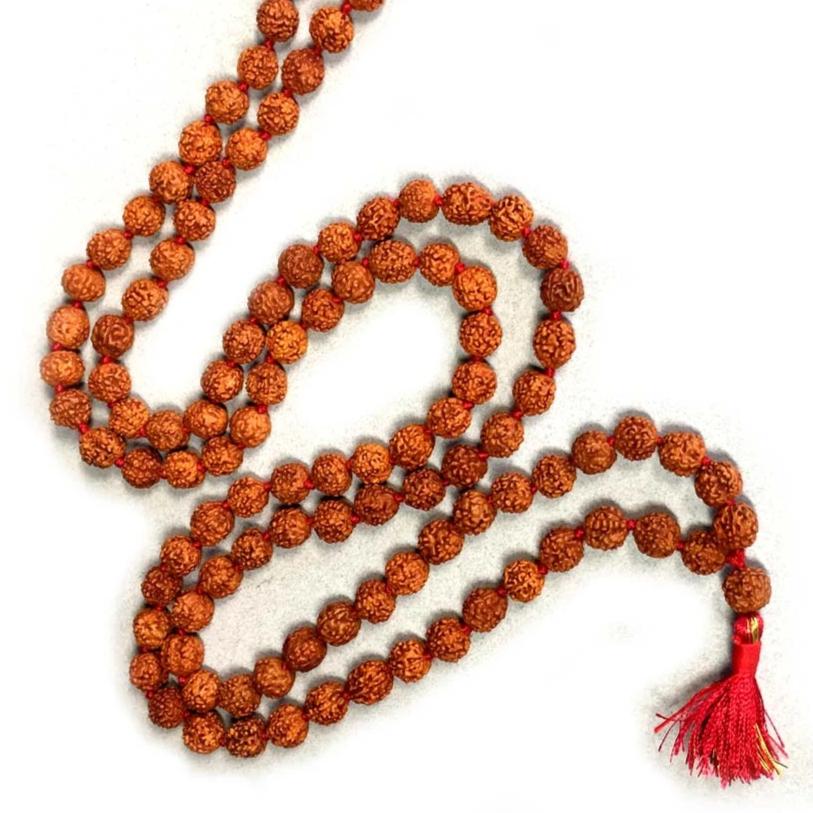
- Rudraksha and sandalwood are natural seeds and wood — keep them dry. Wipe gently with a soft, dry cloth. Avoid soaking or harsh cleaners; over the years, the natural oils of your hands will deepen their color and sheen beautifully.
- Stone and crystal beads can be wiped with a soft, slightly damp cloth and dried at once. Avoid prolonged water, salt, or chemicals, which can dull softer stones.
- Handle the cord kindly, and avoid tugging, so the knotting and tassel stay sound.
Store it with respect
When not in use, give your mala a clean, respectful home rather than a tangled drawer. Many devotees keep it on the altar, draped near the sacred image, or in a small cloth pouch. This keeps it untangled and free of dust — and treats it as the sacred object it is.
Wearing your mala
It is a lovely tradition to wear the mala between sittings, keeping its presence — and the remembrance it carries — near throughout the day. If you wear it often, remove it before showering, swimming, or vigorous activity to protect the cord and beads. Some prefer to keep one mala for daily wear and another reserved for japa; both customs are honored.
Refreshing your mala
Some like to gently “refresh” a mala from time to time — resting it briefly in morning sunlight or moonlight, or passing it through the smoke of incense as a small act of cleansing and intention. (Keep delicate stones out of prolonged harsh sun, which can fade some colors.) More than any ritual, it is your own daily use — the love and attention of practice — that keeps a mala alive.
If the cord wears
With years of devoted use, a cord may eventually loosen or fray. This is not a loss but a sign of a well-loved mala. It can often be restrung, and the beads given new life — another quiet way these pieces are made to last. If you need help, simply reach out.
Looking for a mala to keep for a lifetime? Explore our handcrafted rudraksha, crystal, and gemstone malas — made for daily japa and made to last.
Explore meditation malas →Frequently asked questions
Can I get my mala wet?
Avoid it, especially for rudraksha, sandalwood, and softer stones. A quick wipe with a barely-damp cloth (dried at once) is fine for crystal and most stones, but soaking can damage seeds, wood, and the cord.
How do I store my mala?
On your altar or in a soft cloth pouch — somewhere clean, untangled, and respectful.
Should I cleanse my mala, and how?
It’s optional. A gentle rest in soft sunlight or moonlight, or a pass through incense smoke, is a traditional way to refresh it. Daily practice is the truest “cleansing.”
Can a broken mala be repaired?
Often, yes — a worn cord can be restrung and the beads kept. Reach out and we’ll help where we can.
Is it okay to wear my mala every day?
Yes. Many devotees do, to keep its presence near. Just remove it for showering, swimming, or strenuous activity to protect the cord.
Tend your mala with a little love, and it will keep faithful company on the path for years to come.

